My Blog

My WordPress Blog

Category Archive : Fertilizer Plant Machines

Advantages And Maintenance Points of Wet Material Crusher for Organic Fertilizer Equipment

Organic fertilizer equipment-wet material crusher is also indispensable in the organic fertilizer processing industry. In the process of organic fertilizer processing, both the pre-treatment stage and the deep processing stage of the organic fertilizer wet material pulverizer equipment are inseparable. In the early stage, there are organic fertilizer grinders for the particle size control of large-sized raw materials that are difficult to crush or powdered organic fertilizer. In the later stage of deep processing, the particle size processed by the organic fertilizer equipment crusher has a close influence on the granulation rate and hardness. The importance of the performance of the organic fertilizer crusher equipment is evident. So what are the specific performances, and what points should be taken during maintenance, we will describe them one by one.

Small size semi-wet organic fertilizer powder making machine

The advantages of organic fertilizer equipment material shredder and the points of attention for maintenance

The characteristics of wet material grinder for organic fertilizer equipment

  • The scope of application is wide. The whole machine is made of stainless steel, which can meet multiple industry standards. The crushing chamber is equipped with a water-cooled jacket to meet the crushing requirements of most heat-sensitive materials.
  • No pollution, low noise, separate collection room and dust collection room, so that the dust can be fully collected, which can meet the user’s requirements for cleanliness. The whole maneuvering balance is good, and the noise is greatly reduced.
  • Strong production capacity, which can meet the output requirements of most users.

high moisture materials cruhser effect

Use and maintenance of wet material grinder for organic fertilizer equipment

  • Before using the wet material grinder for organic fertilizer equipment, check the appearance of the machine for damage caused by transportation, and whether the random information is complete.

Before connecting the grinder to the power supply, please confirm whether there are iron foreign objects in the machine cavity to prevent the knife from being hit, and manually rotate the flywheel more than one circle. It is forbidden to carry movable knives by hand to ensure safety. Make sure that the main engine of the wet material grinder of the organic fertilizer equipment rotates correctly, and then the motor can be started and put into production.

  • According to the characteristics of the material, the wet material grinder cutter of the organic fertilizer equipment has different lengths of normal use time. If there is wear, please promptly knife the blade. When installing the knife, the rotary knife must be tightened. After the fixed knife is slightly fixed, adjust the 4 adjusting screws to ensure that the gap between the rotary knife and the fixed knife is 0.2-0.3mm. Then tighten the fixed knife screw and tighten the adjusting screw to complete the tool installation.

semi wet material crusher details

The pulverizer has been running for about 500 hours. Please check the left and right main bearings, clean them if necessary, and add proper amount of grease or replace all the grease.

The organic fertilizer equipment wet material grinder has a heavy workload, and the tightness of the transmission triangle belt must be checked frequently to ensure that the moving knife is only smoothly and reliably transmitted.

  • The wet material grinder and power unit of the organic fertilizer equipment should be installed firmly. If the coal gangue grinder is fixed for long-term operation, it should be fixed on the cement foundation.If the grinder is mobile operation, the unit should be installed on a frame made of angle iron, and the power engine (diesel engine or electric motor) should be guaranteed to smash the gangue. The pulley groove of the machine is in the same plane of rotation.
  • After installing the wet material grinder for organic fertilizer equipment, check the fastening of each part of the fasteners, and tighten them if they are loose. At the same time, check whether the belt tightness is appropriate.
  • Before starting the wet material grinderfor organic fertilizer equipment, first turn the rotor by hand to check whether the claws, hammers and rotor are running flexibly and reliably, whether there is any collision in the shell, and whether the rotation direction of the rotor is in the direction pointed by the arrow of the machine. Consistent, whether the lubrication of the power machine and coal gangue grinder is good.
  • Do not change the belt pulley casually, in case the speed is too high to cause explosion in the crushing chamber, or the speed is too low to affect the working efficiency of the coal gangue grinder.

semi wet material crusher fine parts

  • The wet material grinder for organic fertilizer equipment should be idling for 2~3min after starting, and then feed the material after there is no abnormal phenomenon.
  • Pay attention to the operation of the wet material shredderat all times during work, and feed evenly to prevent blocking the car. Don’t overload your work for a long time. If there are vibrations, noises, excessive temperature of the bearings and the machine body, or spraying materials, the machine should be shut down for inspection immediately, and the work can be continued after troubleshooting.

It can be seen from the above that the organic fertilizer equipment wet material crusher plays an irreplaceable role in the processing of the organic fertilizer production line. At the same time, it has the advantages of wide practicability, environmental protection and pollution-free, high efficiency, and simple operation. On the other hand, as long as the above six requirements are followed during maintenance, the service life of the organic fertilizer equipment pulverizer can be extended.

Cow Dung Production Line Products

Cow dung organic fertilizer production line

The cow dung organic fertilizer production line is a complete set of equipment for processing organic fertilizer with cow manure as raw material. The cow manure processor can be used to first pump the cow manure from the manure tank to the equipment through the mud pump. After the equipment is dehydrated, the water content is 40%. %, you can also use crops such as straws and rice bran (including N\P\K) as fillers, and then sprinkle with biological inoculants, 1KG inoculants mixed with 20KG of water and moved into the raw materials, which can ferment 1 ton of raw materials. Turn and toss once every 1-2 days. Generally, it can be completely decomposed in 7-10 days.

In recent years, pollution of livestock and poultry manure and urine and residues of livestock and poultry products have caused problems to human health. The huge data of livestock and poultry production cannot fail to attract attention. If it is not handled properly, it will cause serious pollution to the environment. For example, because livestock and poultry manure is not treated in time, it will cause serious pollution to surface water, groundwater, soil and air. What’s more serious is that for the convenience of transportation, small-scale farmers simply piled up beef dung beside the road instead of adopting scientific storage methods. Due to neglect of management, wind and rain caused feces to flow everywhere. Such a situation is not conducive to animal epidemic prevention requirements, and it will certainly have a certain impact on people’s living environment.

The green ecological organic fertilizer is produced by fermenting cow dung and crop straw as the main raw materials and using multi-dimensional compound enzyme bacteria. The multi-dimensional compound enzyme bacteria is a microecological fermentation preparation composed of 106 beneficial microorganisms such as heat-resistant bacillus group, lactic acid group, bifidobacterium group, yeast group, etc., which can produce multiple enzymes. It is non-toxic, non-polluting to humans and animals. It is safe to use, can fix nitrogen, dissolve phosphorus, and potassium, and can decompose the residues of chemical pesticides and fertilizers. It has the effect of increasing production, high quality and disease resistance in the planting and breeding industries.

The organic fertilizer production line equipment has a compact process layout, scientific and reasonable, advanced technology, energy saving and consumption reduction, no three emissions, stable operation, reliable operation, convenient maintenance, and wide adaptability of raw materials. Adapt to various ratios of organic compound fertilizer, bio-organic fertilizer, municipal sludge, household waste organic fertilizer, etc. There are many kinds of organic fertilizers, the raw materials are very wide, and the fertilizers are also ever-changing.

There are many types of cow manure organic fertilizer production line in FPC. They all are sold at the favorable price. Welcome to our website for get the latest price of cow dung organic fertilizer production line.  https://www.fertilizerplantcost.com/550000usd-organic-fertilizer-production-line-price/

What Are the Three Forms of Blended Fertilizer Production?

Blended fertilizer is also called BB fertilizer. It is made by mixing two or more granular high-nutrient raw materials as required. Because its formula is easy to adjust, it is especially suitable for areas with large land areas, complex soil types and a wide variety of crops. Blended fertilizer, also known as dry blended fertilizer, is a chemical fertilizer containing any two or three of the three nutrient elements of nitrogen, phosphorus, and potassium. It is made from straight fertilizer or compound fertilizer through simple mechanical mixing. There is no significant chemical reaction. The production technology of blended fertilizers is simple. In the United States, blending operations and fertilizing operations should be carried out on the same day as much as possible. In this case, the storage performance of the product does not need to be considered. In many countries, mixed fertilizers need to be packaged and stored for a period of time, so the storage performance of the product is very important. All raw materials should be dry, uniform in particle size, and high in strength to prevent the product from absorbing water, agglomerating and particle separation during storage and transportation.

There are three forms of mixed fertilizer production:

  • Regional small-scale production. Products are usually sold within a range of tens of kilometers. This form is very common in the United States. In recent years, there are more than 5,300 sets of BB fertilizer production lines, and the average annual output of each lineis about 2.5kt.
  • A large-scale BB fertilizer production line built in the port area or the transportation center area. The basic fertilizer is usually transported by ship, and the product is packed into the market in a larger area. The annual production capacity of each device is 30-300kt.
  • Produced by a basic fertilizer production plant. Generally, several units or compound fertilizers are produced first, and then the blending operations are carried out to produce blended fertilizers of various specifications. For example, the compound fertilizer specifications (N-P2O5-K2O percentage) that can be produced by adding potassium chloride in the production process of ammonium phosphate are 14-37-12, 12-32-16, and 10-25-25, etc., and they are combined with ureato produce various blended fertilizers. The production process of blended fertilizers is relatively simple. Various basic fertilizers are unloaded into the warehouse and then metered and mixed. Products are delivered directly to users by cars or into storage silos.

FPC bulk blending fertilizer production line is equipped with 1-20t/h fertilizer production machines. Welcome to our website to get ideal BB fertilizer production line. https://www.fertilizerplantcost.com/bulk-blending-fertilizer-production-line/

How Does the Compound Fertilizer Processing Equipment Produce NPK Compound Fertilizers?

In recent years, the global NPK compound fertilizer market has seen tremendous growth, because people are increasingly aware of the urgency and necessity of balanced fertilization, and the development of NPK compound fertilizer production technology and formula has also played a certain role. In addition, NPK compound fertilizers usually have more premium space than single fertilizers. Therefore, many manufacturers put NPK compound fertilizers with more premium space than single fertilizers. Therefore, many manufacturers have included NPK compound fertilizers in their product portfolios.

The common granulation technology of compound fertilizer includes drum granulation, disc granulation, spray granulation, tower granulation and so on.

The high-tower nitrate rotating granulation method produces high-concentration nitro compound fertilizer. This technology sprays nicotine, phosphorus and potassium melts from the top of the tower, cools and agglomerates into granules during the landing process. In ammonium nitrate production enterprises, the use of high tower melting granulation method to produce compound fertilizer has the following advantages:

First, it can directly use concentrated ammonium nitrate solution and crushed solid ammonium nitrate for crushing to produce compound fertilizer. This operation simplifies the production process and ensures production safety.

Secondly, the melt rotating granulation process makes full use of the heat energy of the ammonium nitrate concentrate, the moisture content of the material is very low, and the drying process is not required, which greatly saves engineering consumption.

Drum granulator is the most widely used compound fertilizer processing equipment in compound fertilizer production. The formula limit is relatively small, and partial ammoniation can also be used. For most types of equipment, the production line can use 2-3 million units, the daily output is more than 280-400 tons, and the formula is more than 500 tons. Due to the small formula limit, high output, low investment, short construction period and other advantages, drum granulation technology is favored by many compound fertilizer manufacturers. And it is adopted by more and more compound fertilizer manufacturers. Using this method, we can use a drum granulator to complete the production process.

FPC independently develops and produces a complete set of fertilizer equipment such as fermentation equipment, drying equipment, granulation equipment, screening system, and batching system suitable for the production of organic fertilizer and bio-organic fertilizer. Welcome to visit our official website. https://www.fertilizerplantcost.com/npk-fertilizer-plant-cost/

How to Design the Powder Organic Fertilizer Production Line?

The organic fertilizer powder production line has the advantages of simple equipment and technology, convenient operation of the production line, low investment cost, convenient maintenance and so on. As the preliminary process of the granular organic fertilizer production line, the powdery organic fertilizer production line is simply crushing, fermenting, and packaging. The chicken manure organic fertilizer powder production line requires two steps to process commercial organic fertilizer: pre-fermentation and powder processing. After the chicken manure has been fermented and decomposed, organic waste with a moisture content of about 30%-35% is crushed and screened. The finished product is conveyed to the finished product silo by a belt, and is measured and packed into the warehouse by a computerized quantitative packaging system.

What is the powder organic fertilizer production process?

The technological process of organic fertilizer powder production line can be simply divided into three processes: pre-treatment, one-time fermentation, and post-treatment.

Pre-treatment: After the compost raw materials are transported to the storage yard, they are weighed on a scale and sent to the mixing and mixing device, mixed with the factory-manufactured and domestic organic wastewater, added with compound bacteria, and roughly adjusted the moisture and carbon-nitrogen ratio of the compost according to the composition of the raw materials , After mixing, enter the next process.

One-time fermentation: The mixed raw materials are fed into the primary fermentation tank with a loader, and piled into a fermentation pile. A fan is used to forcefully vent air from the bottom of the fermentation tank to supply oxygen. At the same time, the pile is turned over for 2 days, and water is added ( Mainly based on in-plant manufacturing and domestic organic wastewater) and nutrition. Master the fermentation temperature between 50°C and 65°C, and hold aerobic fermentation. The fermentation cycle of this project is 8 days. Every day, one pool of raw materials and one pool of semi-finished products are fed. After the good semi-finished product is discharged, it is ready to enter the next process.

The organic fertilizer fermentation equipment used in this set of organic fertilizer production line is aerobic fermentation bacteria, which has the characteristics of fast heating, good deodorization effect, and maturity. It is suitable for static fermentation and dynamic fermentation mode, and can effectively treat livestock and poultry manure and waste solids. Organic matter such as crop stalks, rice straw, pine husks, peanut shells, rice bran, sawn wood, leaves, mushroom scraps, medicine residue, sugar mash, distiller’s grains, bagasse, monosodium glutamate residue, furfural residue, protein and crude fiber in municipal solid waste Perform rapid heating, deodorization, sterilization, decomposition, and constant temperature control for about 15 days, which can kill viruses, germs, eggs, and weed seeds, and achieve harmless treatment to effectively control the occurrence of soil diseases and insect pests and reduce the amount of pesticides.

There are customized organic fertilizer production lines in FPC. Click here to get the best solution.


How to Buy the Organic Fertilizer Production Line at Best Price?

The construction scale of general organic fertilizer production line configuration is generally 5000 tons-100,000 tons per year. It is necessary to comprehensively consider local resources, market capacity, and market coverage.

What is the cost of fertilizer production equipment?

The equipment investment scale and product selection plan of the manure organic fertilizer production line need to be formulated according to the following conditions: raw material resource characteristics, local soil conditions, local planting structure and main crop varieties, and comprehensive consideration of local resources, market capacity, and market coverage radius. Generally, small new factories can produce 10,000 tons (1.5-2.5 tons/hour), 20,000 tons (2.5-3.5 tons/hour), and 30,000 tons (4.5-6 tons/hour) per year. Medium-sized factories are producing 3- 50,000 tons, large factories are producing 50,000-100,000 tons per year. The investment scale and the design of the production line plan need to be formulated according to the characteristics of raw material resources, local soil conditions, local planting structure and main crop varieties, factory site conditions, and the degree of automation of production.

What configurations of the organic fertilizer production line can I buy?

The manure organic fertilizer production line has three configurations: high, medium and low. Large fertilizer plants must adopt a complete set of production configurations, and the appearance and nutrient content of the finished products can meet the market requirements, and they have a greater advantage in the promotion of finished organic fertilizers. The low-to-medium configuration organic fertilizer production line is suitable for small and medium-sized fertilizer factories. The sales scope of finished organic fertilizer is limited to nearby areas. Some processes in the organic fertilizer production process need to be completed manually.

How do I select the fertilizer machines according to the amount of raw materials?

If the daily production of animal manure exceeds 5 cubic meters, and the maximum amount does not exceed 10 cubic meters, you can purchase simple facilities, mainly mobile turning  machines (turning machines), shredders and other facilities, and the cost of investment facilities needs 15,000 to 45,000 USB. Yuan. If the daily production of livestock and poultry manure exceeds 10 cubic meters, more equipment is recommended. Generally, an investment of 45,000 to 90,000 USB is required, and a complete set of equipment may cost more than $150,000.

What production site is suitable for my organic fertilizer production plant?

Generally, planning principles of site selection: close to raw materials, convenient site transportation, good infrastructure, try to use the original buildings, reduce the scale of investment, increase the efficiency of capital use, and give full play to the demonstration function of the project. Stay away from residential areas and choose down vents; adapt measures to local conditions, arrange compactly, and make use of abandoned land as much as possible: separate living areas from the factory site and maintain environmental sanitation.


semi wet material crusher used in powder fertilizer production line

Semi wet material crusher is a new type of high efficiency single rotor reversible crusher. It uses a high-speed rotating blade to crush fibers with good particle size and strong adaptability to material water content. It is especially suitable for making fermented waste powder or other materials with high water content. It has high efficiency, high energy efficiency and crushing effect.

The particle size can reach 20-50 mesh, which can meet the granulation requirements of general fertilizer granulator. The rotor structure of the equipment is novel, the design is reasonable, the operation is simple and the operation is stable. Completely solve the problem of organic matter crushing with high humidity (water content 25% – 50%), which is an environmentally applicable biotechnology promotion project.

Semi wet material crusher is widely used to crush glass, livestock manure, sludge, domestic waste, straw and other raw materials in the manufacturing process of urban domestic waste and organic fertilizer, and hard materials such as ceramics, bricks and gravel. Crush to achieve the effect of safe use.

The semi wet material crusher adopts two groups of rotors in series, so that the materials crushed by the upper rotor are immediately crushed again by the hammer head of the rapidly rotating lower rotor, so that the materials crushed by the upper rotor are immediately crushed. The materials in the inner cavity collide at high speed and smash each other to achieve hammer powder. The powder effect is discharged directly.

The characteristics of semi wet material crusher are mainly reflected in the following aspects:

1. The discharge particle size can be adjusted arbitrarily and is not affected by the wear of vulnerable parts.
2. With large output and low energy consumption, the power consumption can be saved by more than 40% under the same output. It is equivalent to combining two Hammer Crushers into one. The reasonable design combination is wet material crusher, and two sets of rotors are used in series.
3. The semi wet material crusher does not jam, has good concession, high safety factor, will not jam safely, will not affect production in rainy days, and will automatically clean the mud;

4. The hammer head has a long service life. The hammer head used on eight sides can greatly improve the utilization rate, reduce the use cost and reduce the maintenance time.
Semi wet material crusher is an ideal machine for biological fertilizer production and processing units to shorten the production process of organic fertilizer and compost, reduce equipment investment and save operation cost. As an advanced fertilizer mechanism manufacturer in China, we produce different types of fertilizer machines. Welcome to visit and buy.

More details, go to https://fertilizerplantequiment.com/product/semi-wet-material-crusher/

What a semi wet crusher do for your fertilizer?

Semi wet material crusher is suitable for crushing the mass after fermentation in the process of organic fertilizer production, and is one of the indispensable crushing equipment in the organic fertilizer production line. At the same time, it is widely used in chemical industry, building materials, mining industry and other industries.

The crusher adopts high strength crack resistant carbide chain plate, and the speed is synchronous during the crushing process. The design of feed and outlet is reasonable, the crushed material is uniform, and it is not easy to stick to the wall and easy to clhatean.

The semi wet material crusher is a single rotor. The main working parts are rotors with steel chains. One end of the chain is connected with the rotor, and the other end of the chain is equipped with a ring chain made of wear-resistant steel. Organic fertilizer crusher is a kind of counter attack crusher, which smashes the block by high speed rotating chain.

Semi wet material crusher always adheres to the high-efficiency development of technology and quality, continuously improves the technical level of the pulverizer, and promotes the market value of the whole equipment industry. The key to the quality of the semi wet material crusher is the quality of the hammer. Hammer head directly contact and impact material, which is most easy to wear.

Therefore, it is of great significance to select the hammer head of semi wet material crusher with good quality for its long-term use. The semi wet material crusher adopts titanium tungsten alloy hammer head. The production technology is based on the production of high manganese steel hammerheads for inlay casting improvement, which greatly improves the toughness and impact resistance of the high manganese steel hammerheads.

Semi wet material crusher plays an important role in shortening the process of organic fertilizer manufacturing and composting, reducing equipment investment and saving operation cost. This machine is an ideal machine for chemical fertilizer production and processing units.

More details, welcome go to https://www.fertilizer-plants.com/fertilizer-grinder/

How to buy equipment for your fertilizer production business?

In recent years, China has made great efforts to develop animal husbandry and put forward zero growth of chemical fertilizer consumption. These policies are undoubtedly a big push for animal husbandry. On the other hand, it is suggested to protect the environment, reduce aquaculture emissions and recycle aquaculture emissions. How to reduce agricultural pollution emissions and increase the recycling of aquaculture resources?

In short, it is necessary to use the organic fertilizer equipment to transform the planting pollution into organic fertilizer, and apply the organic fertilizer back to the crops to realize the complete recycling.
So the purchase of organic fertilizer equipment becomes very important, and the appropriate equipment is very important for the production of organic fertilizer. Here are some tips on how to buy organic fertilizer equipment for you:

1. Determine the size of the equipment: for example, how many tons per year, or how many tons per hour, or how many tons per day?
2. Determine whether the production is powdery or granular organic fertilizer. The investment of powder equipment is generally small. The main equipments include premixing equipment, turnover equipment, refining equipment, organic fertilizer powder packaging equipment, belt conveyor, etc. If the particle is selected, it depends on the shape of the production, whether it is standard spherical or irregular. It depends on the local fertilizer market and farmers’ consumption habits.

3. The choice of granulator, if it is to produce standard spherical granulator, disc granulator, drum granulator, wet granulator, organic fertilizer rapid granulator and so on, all these need supporting drying equipment; If columnar granule is selected, the main equipment includes flat mould granulator, ring mould granulator, etc; If the oblate ball is selected, the main equipment is the roller type extrusion granulator, so there is no need to dry during production. Can use the machine, equipment design is relatively simple.

4. Determine the configuration of equipment: different configuration level, different equipment price, different labor, different production environment.
5. Determine the type of fertilizer to be produced. There are four kinds of organic fertilizer: pure organic fertilizer, organic-inorganic compound fertilizer, biological organic fertilizer and microbial compound fertilizer.

The equipment is different. Pure organic fertilizer has strong adaptability and can be produced by general equipment. Organic and inorganic compound fertilizers depend on different fertilizer formulations. If the total nutrient content is high, the selection of granulator is more demanding.

6. Selection of fermentation overturning machine: General fermentation forms include strip fermentation, shallow fermentation, deep tank fermentation, organic fertilizer fermentation tank, tower fermentation and barrel fermentation. Different fermentation methods and fermentation equipment are different. Generally, the shallow tank turnover machine is more suitable for the principle of aerobic fermentation, and the price is not high, so it is more suitable for the actual situation.

More details, welcome go to https://organicfertilizermachines.com/

Belt conveyors for fertilizer pfoduction

As a professional fertilizer mechanism manufacturer in China, we produce various equipment, dumper, granulator, mixer, etc. for fertilizer plant. These are the main processes of chemical fertilizer production, but how is the transportation between machines? Yes, it depends on the belt conveyor, which is a necessary part of the production line.
We have a variety of belt conveyors, here we introduce belt conveyors and mobile conveyors.

With regard to belt conveyors, it can be used for horizontal and inclined transport. It is widely used in modern factories, such as coal, chemical industry, building materials, grain and other industries. Belt conveyor has the advantages of large volume, simple structure, convenient maintenance, low cost and strong universality. Continuous or intermittent movement of conveyor belts is used to transport powdery and granular goods. It is fast in operation, stable in operation and low in noise, and can be transported up and down.

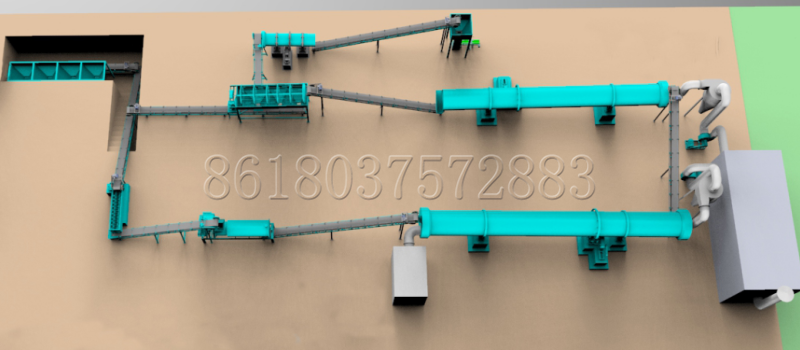
NPK Drum Granulation Line

NPK Drum Granulation Line

Mobile belt conveyor is mainly used in places where loading and unloading places often change, such as fertilizer plant, coal yard, mine, warehouse, construction site, sand and stone yard, farm, etc. Short distance transportation, loading and unloading of materials or bulk materials with a single weight less than 100kg. It is a kind of continuous loading and unloading equipment with high efficiency and good maneuverability. It is light, beautiful and flexible. The rotary device is an electric drum, and equipped with tire wheels, which is convenient to move. The tilt angle and height are adjustable.

So you can see that the biggest difference between the two belt conveyors is that one is fixed, the other is detachable. Usually, the customer chooses the fixed one for transportation, the detachable one for packaging, or if you can pack only by manpower.