My Blog

My WordPress Blog

Month: February 2022

What Are the Steps Required to Make Pig Manure Organic Fertilizer?

Pig manure organic fertilizer is an organic fertilizer made from pig manure after a series of processing. The fermented pig manure is an ideal fertilizer, which can make the soil loose and fertile and provide sufficient nutrients for the growth of crops. So what steps are required for the production of pig manure organic fertilizer? The following FPC pig manure organic fertilizer equipment manufacturers will take you to find out.

Granular and powder organic fertilizer production line

First, the raw materials such as pig manure should be fermented and decomposed. The whole fermentation process can kill the harmful bacteria in it. The fermentation process is a more important step in the production process of organic fertilizer.

Second, the next step is material crushing, using organic fertilizer semi-wet material crusher to preliminarily decompose the raw materials.

self propelled compost turner

Third, ingredients are a key step in fertilizer production. It is mainly to add appropriate ingredients in proportion to enrich the organic matter content of organic fertilizers and improve the quality of fertilizers.

Fourth, after the material is evenly stirred, it is the granulation step. The mixed material is made into the required granules, which is especially suitable for materials with relatively high viscosity. The effect of granulation will be directly related to the quality of the finished organic fertilizer, so this is also the whole process. Important steps in the production process.

Fifth, the temperature of the material will become very high after the drying process, and then the temperature needs to be lowered, and cooling equipment is required here.

Cow Manure Granulation Machine

Sixth, screening is to screen out unqualified material particles, and unqualified materials will be returned to the production line for reprocessing. The use of organic fertilizer screening equipment here can save labor and has the advantage of high efficiency and easy operation.

Seven, the container used for stirring must meet the requirements of the production process, such as pressure resistance, high temperature resistance, medium corrosion resistance, and ensure the cleanliness of the product. Because the materials are different, the manufacturing process and structure of the mixing container will also be very different.

Eighth, the transportation is to transport the finished organic fertilizer to the place where the terrain is relatively high, and prepare for convenient storage.
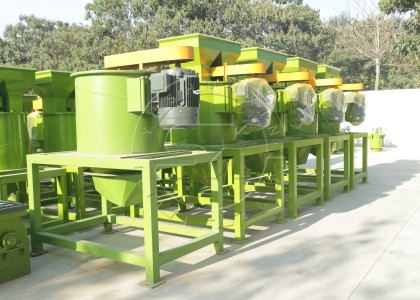
Vertical Fertilizer Material Crushing Machines

Vertical Fertilizer Material Crushing Machines

Nine, packaging is the last link in the production of pig manure organic fertilizer, in order to protect the finished product during the circulation process, and at the same time to facilitate sales.

Fermentation turners, pulverizers, mixers, granulators, dryers, screening machines, packaging machines, etc. are needed in the process of producing pig manure organic fertilizer. The above are all the steps for producing pig manure organic fertilizer. You can refer to it and hope to bring some help to your work. If you still have questions or needs about organic fertilizer production, please feel free to visit FPC organic fertilizer equipment factory.

How Can I Choose the most Suitable Organic Fertilizer Turning Equipment?

Organic fertilizers are now playing an increasingly important role in the agricultural field, gradually replacing chemical fertilizers to provide nutrients for crop growth. In the process of producing organic fertilizers, organic fertilizer turning equipment is one of the indispensable equipment in the production line, which plays an important role in turning the materials over. Throwing treatment plays an important role in promoting the fermentation and decomposing of materials. Nowadays, the organic fertilizer equipment manufacturers on the market are mixed, and the quality is uneven, so how to choose the most suitable organic fertilizer turning equipment? Today, FPC organic fertilizer composting turner manufacturer will take you to find out.

Self Propelled Windrow Compost Turner For Sale

First, choose organic fertilizer turning equipment according to the annual organic fertilizer output. Different types of organic fertilizer turning equipment are suitable for organic fertilizer manufacturers of different scales. Therefore, before purchasing equipment, you must first understand your annual organic fertilizer output, the quantity and moisture content of raw materials, etc. Only with a full understanding of these issues, it will be easier to do when purchasing organic fertilizer compost turning equipment.

Second, it is necessary to understand the types of organic fertilizer turning equipment. Now organic fertilizer turning machines are mainly divided into trough type and self-propelled turning machines, because the trough type composting turner machine needs to be constructed manually before operation, and due to The structure of the trough dump truck is special, and the oxygen supply is not as good as that of the self-propelled dumper. Therefore, most organic fertilizer manufacturers prefer to purchase the self-propelled dumper. In fact, the trough turner also has advantages. It will save more land than the self-propelled turner. It can be installed with an organic fertilizer granulation production line to achieve continuous production.

Wheel type Compost Turner for Large Scale Composting

The self-propelled turning equipment adopts the design of four-wheel walking system, which is convenient and simple to operate. It can turn forward and backward. During the driving process, the whole vehicle rides on the pre-stacked long strip of fertilizer base, and uses the lower auger of the rack. The stirring knife flips, fluffs and moves the material, and after passing the car, it forms a new strip stack. The machine modification work needs to be carried out in open and outdoor venues that can be open-air, or in the greenhouse in the production workshop for homework. The self-propelled pile turner is economical and practical, equipped with a cab, the rear shaft adopts a universal joint shaft, and the auger transmission method adopts double chains to realize the transmission. The equipment is durable and safe.

Moving type compost turning machie

After you have a full understanding of your own annual output and the types of organic fertilizer turning equipment, you can have a clear idea and a clearer purpose when choosing organic fertilizer equipment. When purchasing, it is best to choose products from regular manufacturers and look at the reputation of the manufacturers in the industry, so that the quality of the purchased equipment and after-sales service will be more guaranteed.

What Problems Should Be Paid Attention to When Choosing Organic Fertilizer Equipment Dryer?

With the rapid development of the agricultural industry, the demand for organic fertilizers continues to increase, and the production and processing of organic fertilizers has become a popular industry. Organic fertilizer equipment dryer is one of the indispensable equipment in organic fertilizer production, which plays an important role in regulating the moisture content of materials. So what problems should you pay attention to when choosing an organic fertilizer dryer? The following FPC organic fertilizer equipment dryer manufacturers will take you to find out.

Manure Dryer

First, the size of the dryer should be determined according to the moisture content of the processed feces and the drying amount of the finished product, not just the evaporation, which will be very inaccurate.

Second, after selecting the correct model of the dryer for organic fertilizer equipment, it is also necessary to select the corresponding model and specifications of the fan, Shakron and closed fan.

Third, the material and thickness of the organic fertilizer equipment dryer should also be well selected, because if the material and thickness are not selected properly, the dryer will be easily corroded and damaged during the working process, which will greatly shorten the service life.

Rotary Drum Dryer Used in Fertilizer Production Line

Fourth, the construction of the dryer hot blast stove, because the weight of the hot blast stove is very large, and the conventional hot blast stove weighs more than 20 tons, which is difficult to transport. Therefore, many manufacturers build hot blast stoves on their own sites. During the construction process, attention should be paid to the fire isolation measures for the selection of refractory materials and organic fertilizer equipment.

Fifth, because the temperature of the front end of the fire tube of the dryer is generally high, the front of the fire tube of the dryer should be built well. Here are some simple recipes for refractory cement for your reference: bauxite cement 15%, low fine lead powder 15% %, high temperature stone aggregate 70%.

The above are some of the issues that should be paid attention to when choosing organic fertilizer equipment dryers. You can refer to them. When choosing equipment, you should be aware of your own production volume and choose appropriate equipment specifications, so as to maximize the utilization of resources.

What Problems Should Be Paid Attention to in the Use of Organic Fertilizer Production Line?

With the development of society and the continuous improvement of people’s living standards, the requirements for food are also getting higher and higher. It is no longer just enough to eat, but also to eat well. Whether it is vegetables or fruits, we must pursue more green and healthy organic fertilizers. Such organic fertilizer food is inseparable from the application of organic fertilizer, and organic fertilizer is inseparable from the organic fertilizer production line. In recent years, more and more people have discovered this business opportunity, and have built organic fertilizer production lines and started the production and processing of organic fertilizers. So what problems should be paid attention to in the process of using organic fertilizer production line? Today, FPC organic fertilizer production line manufacturer will take you to understand.

Granular and powder organic fertilizer production line

First, pay attention to the ability of the production line

The production capacity of organic fertilizer production lines of different scales is different, so in the process of use, we cannot just pursue the size of the output without considering the production capacity, which will affect the service life of the equipment. Only scientific production according to the production scale can ensure the smooth progress of production.

Powdery organic fertilizer production line

Second, pay attention to regular inspections

The organic fertilizer production line should be regularly repaired, and you can’t wait to find the problem when there is a problem, which is prone to major problems. Routine inspections can detect small problems in time, and completely solve the fault in the bud. This can effectively prolong the service life of the organic fertilizer production line.

Third, pay attention to the correct operation

The operation of machinery has its own operation process. Only by carefully reading the instructions before use and operating according to the correct process can the probability of equipment failure be reduced, thereby improving production efficiency.

Process for Making Powdery Organic Fertilizer from chicken Manure

A large amount of capital is required to build a set of organic fertilizer production line. If you want to create better economic benefits, you must master the scientific method of use and exert the best ability of the production line. If you still have questions or needs about the organic fertilizer production line, please feel free to consult the FPC organic fertilizer production line manufacturer.

How Is Sheep Manure Converted into Organic Fertilizer through Organic Fertilizer Equipment?

Organic fertilizers are now more and more widely used in the agricultural field. While providing sufficient nutrients for crops, they can also improve soil quality. So do you know how organic fertilizers are processed? Today, taking sheep manure organic fertilizer as an example, I will show you how to use organic fertilizer equipment to convert sheep manure into organic fertilizer.

First, mix an appropriate amount of straw powder into the sheep dung. The specific amount is determined according to the moisture content of the sheep dung. Usually, the moisture content of fermentation requires 45%. The dripping water will disperse as soon as you let go, and you will meet the requirements. Then add cornmeal and bacteria, the role of cornmeal is to increase sugar, which can promote the fermentation of bacteria.

Granular and powder organic fertilizer production line

The next step is to add the prepared mixture into the fertilizer horizontal mixer machine for uniform mixing. Pay attention to the mixing must be complete and no lumps are left.

The mixed ingredients are piled into long strips with a width of 1.5-2 meters and a height of 0.8-1 meters. Use a turning machine to turn them once every two days. The piling will heat up in 2 days, become fragrant in 9 days, and become fertilizer in 10 days. On the second day, the temperature can reach 60-80 degrees, eliminating diseases and insect pests such as Escherichia coli and eggs; on the 4th day, the odor of sheep manure can be eliminated; on the 7th day, the compost will become loose and dry, covered with white Mycelium, on the 9th day, the aroma of wine koji was emitted; on the 10th day, the bacterial fertilizer was fermented and matured.

semi wet material crusher details

After the fermentation is mature, it can be pulverized by a semi wet material pulverizer after a little drying. After being granulated by an organic fertilizer granulator machine, it is dehydrated by a dryer and screened by a sieving machine. The finished organic fertilizer is completed. The final step is to package the factory for sale or storage.

The above are the specific steps for converting sheep manure into organic fertilizer through organic fertilizer equipment. You can refer to it. If you have any questions or needs about organic fertilizer production, please feel free to consult FPC organic fertilizer processing equipment manufacturer.

Take You to Understand the Use Characteristics and Precautions of the Organic Fertilizer Double-Die Granulator

Organic fertilizer double-die granulator is one of the production equipment for producing organic fertilizer at present. It is a fertilizer equipment carefully manufactured by technicians on the basis of advanced existing equipment and after years of improvement. This machine has sophisticated technology and is easy to operate. , and designed a variety of models of different models, which can meet various production and processing needs, so what are the characteristics of the organic fertilizer double-die granulator? What should be paid attention to in the process of use? Today, FPC organic fertilizer granulator manufacturer will take you to find out.

Double Rolloer Granulator for Sale in SX

First, the granular material processed by the organic fertilizer double-die granulator has a smooth surface and moderate hardness. During the processing, it can better maintain the internal nutrition of the material. It integrates a feeder, a mixer and a granulator. While feeding evenly, it can also carry out secondary fermentation of the material. The feeder is equipped with a governor, which adjusts the feeding amount according to the dry humidity of the material during production, so that the host is not easy to get stuck. The main machine integrates the ring die and the flat die, which is equivalent to the work of two granulators.

Second, the organic fertilizer double-die granulator has uniform particle composition and neat shape. The pore size of the particle size can be divided into 05, 06, 07, 08, etc., users can flexibly choose according to their own production needs.

Third, the mold, stirring and conveying blades of the double-die granulator are all made of corrosion-resistant stainless steel. Thereby effectively increasing the output and reducing the loss of equipment.

Double Roller Granulator in Manufacturing

The following is an introduction to the correct use of the double-die granulator:

  1. Fill the gearbox with 40# or 50# mechanical oil. If the temperature is low, add 70# or 90# gear oil before starting the machine;
  2. Install the granulator smoothly, adjust the steering is normal, check whether the screws between the various parts are loose, pay attention to the gap between the pressing spoke and the mold in the season, the gap between the roller and the template is 0.1-0.3 mm, so that the machine It can be used after it is in a no-composite state and starts normally. The starting sequence is: 1, start the granulator; 2, start the feeder; 3, feed and adjust the speed of the feeder.
  3. When the new double roller press machine is used for the first time, gradually add oily materials. The relay of chicken and duck is repeatedly squeezed to make the die hole lubricated and smooth, and then slowly add the materials to be processed and mixed for processing. If you feel that the resistance of the die hole is relatively large , When the output is low or no material is produced, the template can be repeatedly ground according to the method mentioned above, so that the die hole is lubricated and smooth before processing.
  4. In the process of material processing, if there are more refined fibers, about 5% of water should be added. If there are more refined fibers in the mixture, the amount of water added can be appropriately reduced. Water will evaporate during the extrusion process. When adding compound fertilizer, attention should be paid to the chemical reaction of the material and the degree of dryness and wetness.
  5. After the processing is completed, the feeder must be running at no load, and the host material cannot be accumulated. Pay attention to the minimum value of the current before it can be turned off. The correct sequence of shutdown is: stop feeding – close feeder – close granulator.

The above is the introduction of the use characteristics and correct use methods of the double-die granulator. You can refer to it. Only by mastering the scientific use method can ensure the high efficiency of production work and effectively prolong the service life of the equipment.

Nine Processes and Equipment in the Production of Organic Fertilizer Equipment

Many customers have asked me before, what processes do organic fertilizer equipment go through in the production? Today, I will answer in unison.

Nine processes and equipment in the production of organic fertilizer equipment:

  1. Pulverize

The raw materials are preliminarily decomposed by materials crushing equipment.

  1. Dry

The moisture in the material (generally refers to moisture or other volatile liquid components) is vaporized and escaped by heating to obtain a solid material with a specified moisture content. The purpose of drying is for the needs of material use or further processing.

  1. Cool down

The material obtains high temperature through the drying process, and then needs to be cooled. Because water cannot be used for cooling, cooling equipment is required to isolate the contact between the material and water.

  1. Ingredients

Ingredient is a critical step in fertilizer production. Its main function is to add appropriate ingredients in proportion to improve the quality of fertilizers.

  1. Sieve

Screening is to screen out impurities and fertilizers with poor quality. The drum type screening equipment here has the advantages of high efficiency and easy operation.

  1. Granulation

The mixed material is made into the required granules, especially for materials with high viscosity.

  1. Mix and stir

The material of the stirring vessel should meet the requirements of the organic fertilizer production process, such as pressure resistance, temperature resistance, medium corrosion resistance, and product cleanliness. Due to the different materials, the manufacturing process and structure of the stirring vessel are also different, so it can be divided into steel stirring equipment, glass-lined stirring equipment and lining stirring equipment.

  1. Lift Conveyor

Conveying is for transporting the finished fertilizer to a higher location for convenient storage.

  1. Quantitative packaging

Packaging is the last link in fertilizer equipment. In order to protect the product during the circulation process, facilitate storage and transportation, and promote sales, it is the general name of the containers, materials and auxiliary materials used according to certain technical methods; Operational activities in which certain technical methods are applied in the process of using containers, materials and auxiliary materials.

This technology uses biological fermentation technology to rapidly ferment livestock and poultry manure, human excrement, and crop straw to achieve the effects of heating, deodorization, and harmlessness, and to make organic fertilizer, which not only achieves waste recycling, but also reduces the cost of waste. The production investment cost of farmers. The above is all the introduction of the nine organic fertilizer production processes, if you want to know more, please contact our manufacturer.

Organic Fertilizer Equipment Manufacturers Take You to Understand the Workflow

Organic fertilizer equipment manufacturers are simply divided into complete organic fertilizer procrssing process of pre-treatment, primary fermentation and post-treatment. There are some differences between the organic fertilizer powder production line and the granule production line. The powder production line is fermentation > feeder > pulverizer > mixer > screening machine > automatic packaging machine > finished product, granular organic fertilizer production line: fermentation > feeder > pulverizer > Mixer > Screening Machine > Granulator > Automatic Packaging Machine > Finished Product. The following editor will take you to understand the working process of organic fertilizer equipment.

Powdery organic fertilizer production line

  1. Pre-treatment: After the compost raw materials are transported to the yard, they are weighed by scales, and then sent to the mixing and stirring device, mixed with the organic wastewater from production and domestic production in the factory, and compound bacteria are added, and the moisture and carbon content of the compost are roughly adjusted according to the raw material components. Nitrogen ratio, after mixing, go to the next process.
  2. Primary fermentation: The mixed raw materials are sent to the primary fermentation tank with a loader, piled into a fermentation pile, and the fan is used to force ventilation from the bottom of the fermentation tank to supply oxygen. Moisture (mainly in the factory production, domestic organic wastewater) and nutrients, control the fermentation temperature at 50 ~ 65 degrees Celsius, carry out aerobic fermentation, the fermentation period of this project is 8 days, and a pool of raw materials is fed into a pool of semi-finished products every day. After the fermented semi-finished products are discharged, they are ready to enter the next process.
  3. Post-processing: the compost product is further screened, and the under-screen is processed according to the moisture content. After the sieve is granulated, it is sent to the dryer heated by the biogas of the biogas tank for drying, and the medium and trace elements are added according to the proportion, stirred and mixed to make the finished product, which is packaged and stored for sale. The material on the sieve is returned to the crushing process for reuse.

Granular and powder organic fertilizer production line

The specific process is different according to the different organic fertilizer products, mainly divided into two types.

  1. Organic fertilizer powder production line: fermentation > feeder > pulverizer > mixer > screening machine > automatic packaging machine > finished product.

In the middle, a belt conveyor is also needed to connect various equipment. Fermentation equipment is used to turn over the piling machine, there is a trough type turning machine, and the crawler type piling machine is used to turn the organic fertilizer to make it fully fermented. core steps.

  1. Granular organic fertilizer production line: fermentation > feeder > pulverizer > mixer > screening machine > granulator > automatic packaging machine > finished product.

The granulation production line has an additional granulation step, and there are various granulation methods, such as disc granulation, roller extrusion granulator, etc. There is a certain gap between the two processes, and the cost of construction is also quite different, and the cost of the powder production line is lower.

The above is the working process of the organic fertilizer equipment. When the organic fertilizer equipment is in operation, it must be carried out according to the specified operation method. Improper operation methods may cause damage to the equipment. Everyone must follow the regulations when operating organic fertilizers. Our factory mainly produces organic fertilizer, water-soluble fertilizer equipment and other products. Welcome to consult.

Process Flow of Sheep Manure Processing Organic Fertilizer

Judging from the current information, the sheep manure organic fertilizer making line is still relatively unfamiliar to everyone. In short, it is similar to the production and processing equipment of cow manure, pig manure and chicken manure organic fertilizer.

Organic fertilizer process:

  1. Mix sheep manure with crop straw, and determine how much to add according to the moisture content of sheep manure. According to the fermentation process, the moisture content is within 45%, that is to say, when the material is kneaded into a mass, water can be seen but the water will not drip. , if you loosen the group, it will disperse. Then, the cornmeal and the required strains are added, because the sugar content can be increased to promote the rapid fermentation of the strains.
  2. Add the configured materials into the material mixing machine for mixing, and the mixing is required to be uniform and transparent without leaving any lumps.
  3. Then, stack the mixed materials in the fermentation tank or fermentation tank with a width of about 2-6 meters and a height of about 1-1.5 meters. throw.
  4. Under normal circumstances, the temperature will rise after 2 days of stacking in the fermentation tank, there will be no odor after 2 days, and it will become fluffy and loose after 3 days, and finally after 2 days, the compost will emit fragrance, usually 10 to 15 days to become fat.
  5. The material moved by the forklift to the crushing process is crushed by the semi and high humidity material crusher, then mixed by the mixer, and transported to the fertilizer granulator by the conveyor for granulation. It is sent to the granules drum dryer by the belt conveyor for drying and drying, and then enters the cooler for cooling, and then the conveyor is sent to the screening machine for screening. More than 95% of the required particles will enter the next process, while about 5% The granules will be transported to the pulverizer to be crushed and re-granulated again, and the granules that meet the standard will enter the coating machine for coating.

Even if the sheep manure is completely processed through the above process, it can be packaged and stored for sale. This is of great benefit to manufacturers and society. Animal manure is not only beneficial to production, but also plays a role in environmental protection.

How to Compress and Granulate Organic Fertilizer in Organic Fertilizer Production Line

At present, the use of organic waste to produce organic fertilizer through biological fermentation has been rapidly developed, because it can realize the harmless and resourceful treatment of organic waste. However, most of the organic fertilizers obtained by biological fermentation are in the form of coarse powder or irregular small pieces, which are very inconvenient to use, especially unfavorable for large-area machine-sowing. Today, the FPC organic fertilizer manufacturer will explain how the organic fertilizer production line compresses and granulates the organic fertilizer.

The existing technologies for making the coarse powder or irregular small block organic fertilizer after biological fermentation into spherical granular organic fertilizer mainly include the following:

Double Rolloer Granulator for Sale in SX

  • Some manufacturers use traditional disc or drum granulation, and need to dry coarse powder or irregular small pieces of organic fertilizer (moisture <15%) and pulverize it into very fine (more than 100 mesh) powder , and then add binder and inorganic fertilizer, and the amount of binder and inorganic fertilizer added in the organic fertilizer cannot be greater than 30%. Although this method can be made into spherical particles, because the organic fertilizer in the processing process will be first Sufficient precipitation is crushed, water is added to granulate and then dried, repeated many times, so the organic fertilizer processing cost is quite high, and due to the low density of organic fertilizer, the particle strength is low, which is not conducive to storage, transportation and machine sowing.
  • There are also some manufacturers who first dry the coarse powder or irregular small pieces of organic fertilizer to a moisture content of only 20-25%, and then use a flat die extrusion granulator or a counter-roll extrusion granulator to dry the fertilizer. The organic fertilizer is extruded into columnar or flat spherical particles. Although this method is more convenient to use, the fluidity is not very good, it is not suitable for machine sowing, and the appearance is poor and the appearance is not good.

  • There are also some manufacturers who extrude coarse powder or irregular small pieces of organic fertilizer into short columnar particles with a flat die extrusion pelletizer(due to high moisture and high fiber content, the columnar particles also have certain characteristics. Plasticity), then polished and formed into spherical particles, and then the spherical particles are dried, cooled and screened to obtain qualified particles. In this method, the raw materials do not need to be treated, the order of moisture is reduced, and the production cost is greatly reduced, but this method also has some fatal The weakness is that the organic fertilizer is easy to be arched, easy to block and easy to bond equipment, and at the same time, the output is small and the power consumption of the extrusion process is high.

Therefore, in summary, the use of collision granulator to produce organic granular fertilizer has the advantages of low production cost, uniform product particle size, high strength, good fluidity, favorable for long-term storage and transportation, and suitable for machine sowing. That is to say, the performance of the products produced in this way is very good.