My Blog

My WordPress Blog

Tag Archive : fertilizer

3 ways to learn the organic fertilizer

1. Improve soil fertility. After applying organic fertilizer to soil, organic matter can effectively improve soil physical and chemical properties and biological characteristics, solidify soil, enhance soil fertility and buffer capacity, and create good soil conditions for crop growth.

2. Increase production and improve quality. Organic fertilizer is rich in organic matter and a variety of nutrients, providing nutrients for crops. The decomposition of organic fertilizer can provide energy and nutrients for soil microbial activities, promote microbial activities, accelerate the decomposition of organic matter, and produce active substances, which can promote crop growth and improve the quality of agricultural products.

3. Improve fertilizer utilization rate. Organic fertilizer contains many kinds of nutrients, but its relative content is low and its release is slow. However, chemical fertilizer has high nutrient content, less composition and fast release. The organic acids decomposed by organic matter can also promote the dissolution of mineral nutrients in soil and fertilizer. Organic fertilizer and chemical fertilizer promote each other, which is conducive to crop absorption and improve fertilizer utilization rate. Want to make your own organic fertilizer? Go to https://organicfertilizermachines.com/

Humic Acid Fertilizer How to Do

Humic acid is extracted from soil and fertilizer is extracted from basic characteristics of humic acid. At present, facing the safety problems of soil, fertilizer, grain and environment, we must adjust the development direction of fertilizer industry in time and build a new relationship of “harmony between soil and fertilizer”.

Humic acid, as the “nutrient” of soil nutrients, is a bridge link connecting soil fertilizer plant nutrition. Under the guidance of humic acid in plant mineral nutrition, how can we master the technical requirements of humic acid?

1、 Humic acid + macronutrients
Group structure efficiency
The combination of humic acid and nitrogen fertilizer can reduce the loss of nitrogen and improve the utilization rate of nitrogen; Humic acid and phosphate fertilizer can activate phosphorus and improve the utilization rate of phosphate fertilizer in season; Humic acid and potassium fertilizer can activate potassium and promote the absorption of potassium by crops
Adduct

Humic acid + nitrogen = humic acid nitrogen, Urea Humic acid, and ammonium humic acid; Humic acid + phosphorus = humic acid phosphate; Humic acid + potassium = potassium humic acid fertilizer;
2、 Humic acid + nutrient content
Group structure efficiency
Humic acid can store, protect and increase efficiency of some elements by adsorption, chelation, complexation and ion exchange, reduce the fixed nutrient content of soil, improve nutrient utilization rate and promote crop absorption.

Go to https://organicfertilizerplants.com/ for more details.

Humic acid + calcium = calcium humic acid fertilizer; Humic acid + magnesium = magnesium humate fertilizer; Humic acid + sulfur = humic acid sulfur fertilizer;

3、 Humic acid + micronutrient
Group structure efficiency
Humic acid, as chelating agent and surfactant, can improve the fertilizer efficiency of trace elements and promote the absorption of trace elements by crops. At the same time, humic acid and fulvic acid are used as chelating agents, and their cost is better than other types of products.
Adduct
Humic acid + iron = iron humic acid fertilizer; Humic acid + manganese = manganous humic acid fertilizer; Humic acid + zinc = zinc humic acid fertilizer;

4、 Humic acid + beneficial elements
Group structure efficiency
Humic acid can activate and coordinate beneficial elements through adsorption, network (chelation), oxidation-reduction, etc., so as to improve the fertilizer efficiency of beneficial elements and promote the absorption of beneficial elements by crops.

Humic acid + silicon = humic acid silicon fertilizer; Humic acid + selenium = humic acid selenium fertilizer; Humic acid + Sodium = sodium humic acid fertilizer;
5、 Humic acid + beneficial microorganism
Group structure efficiency
Humic acid and beneficial microorganism are combined. On the one hand, humic acid can promote the growth and reproduction of microorganisms and enhance the activity of beneficial microorganisms; On the contrary, it can promote the further decomposition and synthesis of humic acid, which is beneficial to the absorption and growth of plants. The two combine and complement each other.

Humic acid + nitrogen fixing bacteria = humic acid nitrogen fixation; Humic acid + phosphate dissolving bacteria = humic acid phosphate fertilizer; Humic acid + potassium solution = humic acid solution potassium fertilizer;
Humic acid is added to the land and grows in the countryside, which is conducive to promoting the construction of “beautiful countryside and green countryside”, and also enables humic acid to have its own home.

How to make the fertilizer without caking?

1. The moisture content and packaging temperature of fertilizer can be reduced by heating the dryer, cooling the dehumidifier and installing air conditioner, so as to make the moisture content of fertilizer lower than 0.6%, prolong the cooling time of fertilizer and reduce the packaging temperature.
2. Adding anti caking agent into the raw material to reduce the physical and chemical reaction between particles.
3. The uniformity of fertilizer particles can be further improved by improving the screening system.
4. Reduce the storage height and pressure of fertilizer.

How does the dealer do it?

1. Reduce the temperature and humidity of the warehouse, put the fertilizer warehouse in a cool and dry place, ensure no water leakage on the roof and no water accumulation on the ground, set fans in the warehouse, and cool and dehumidify if necessary.

New Type Organic Fertilizer Production Line

New Type Organic Fertilizer Production Line

2. After a period of time, the fertilizer is often turned, especially the fertilizer with high nutrient content, which is easy to caking after a long time, so we should pay more attention to turning the fertilizer frequently.

3. The fertilizers easy to produce chemical reaction shall be stacked separately to prevent chemical reaction caking.
4. Reduce the height of compost with certain machines, reduce the pressure between particles.

5. Avoid blind ordering, reduce inventory pressure, prevent fertilizer accumulation time is too long caking.
6. Select products from regular manufacturers to prevent uneven granulation and agglomeration.

Now, I would like to introduce the production line of roller granulator to you

Features of production line:

1. The roller granulator has no drying process, normal temperature granulation, one-time molding, less investment, quick effect and good economic benefit.
2. Compound fertilizer roller extrusion granulator has the advantages of small power, reliable operation, no waste discharge, stable operation, convenient maintenance, reasonable process layout, advanced process and low production cost.
3. Roller granulator can be widely used in raw materials, compound fertilizer, medicine, chemical fertilizer, feed, coal granulation. Metallurgical and other raw materials can produce various concentrations and types of compound fertilizers (including organic fertilizer, inorganic fertilizer, bio organic fertilizer, magnetic fertilizer, etc.).
4. Roller granulator, especially raw materials such as carbonated soil, ammonium sulfate and compound fertilizer, fills the gap in China and is at the leading level in China. It is a national environmental protection technology promotion project.

More detailed info go to https://organicfertilizerplants.com/

Methods for Fertilizer Production and Application

Pay attention to the time of fertilization

Organic fertilizer is slow to use, so it should be applied as early as possible. It is usually used as the base fertilizer before sowing or sowing, and fermentation will be better before use. The latter is less effective than the basic fertilizer.

Fertilizer has a quick effect, and should be used as base fertilizer one week in advance. Fertilizer should be applied before the critical period of crops or during the peak period of nutrient absorption to meet their needs.

How to make organic fertilizer, here are complete systems for your reference, https://organicfertilizermachines.com/organic-fertilizer-production-line/

Biological fertilizer plays an important role in inhibiting bacteria in soil. Therefore, under the premise of bacteria having reproductive growth time, it should be applied early, which can be applied with organic fertilizer for soil or during implantation or implantation before application.

NPK Drum Granulation Line

NPK Drum Granulation Line

Second, pay attention to the application method

The main function of organic fertilizer is to improve the soil and provide nutrients, which is usually used as the basic fertilizer in the soil. Therefore, the organic fertilizer and soil should be mixed evenly with the deep plough to achieve the purpose of improving the soil. It can also be used in combination with microbial agents for acid-base reproduction, which will improve the soil environment, balance nutrition and increase the structure of soil aggregates. To make fertilizer met the requirements, it is necessary to select a realiable organic fertilizer machine manufacturer.

In the basic fertilizer, because the nutrients in the organic fertilizer are mainly nitrogen, it can reduce the nitrogen fertilizer in the organic fertilizer, the base fertilizer can use 30%, the rear fertilizer can use 70%. Phosphate fertilizer and potassium fertilizer can be paid off as base fertilizer at one time. The fluidity of phosphate fertilizer is poor, and the recovery effect is poor in the later stage. Therefore, the phosphate fertilizer should be applied to the soil as the base fertilizer.

To make compound fertilizer, here are machines for your reference:https://organicfertilizermachines.com/compound-fertilizer-production-line/

The best way to apply the fertilizer is to use the full solution quick acting fertilizer, such as the source Bank of P and K, which can be absorbed quickly after the decomposition of vegetables, which has little influence on the soil. Biomass fertilizer can be concentrated in planting sites or based on organic fertilizer because of its small quantity. The latter can be used to produce long bacteria by using the same kind of biological fertilizer to improve the removal ability and disease prevention effect of phosphorus and potassium solution.

Finally, pay attention to the dose

Different crops have different growth stages. The amount of fertilizer is different, so the amount of fertilizer should be controlled, and the fertilizer should be applied according to the different needs of plants, and the content of nutrient elements in soil should be considered comprehensively
Reasonable collocation of chemical fertilizer.

We can arrange engineers to go to the customer factory or workshop to check the situation on site, and then make the production layout drawings for the customers.

We provide installation and maintenance for overseas engineers.
For the construction of customers, we can provide construction drawings for free.

When customers visit China to check our factories, we can take our machines to our fertilizer plants, including roller pressing granulation production line, organic fertilizer production line, NPK compound fertilizer production line.
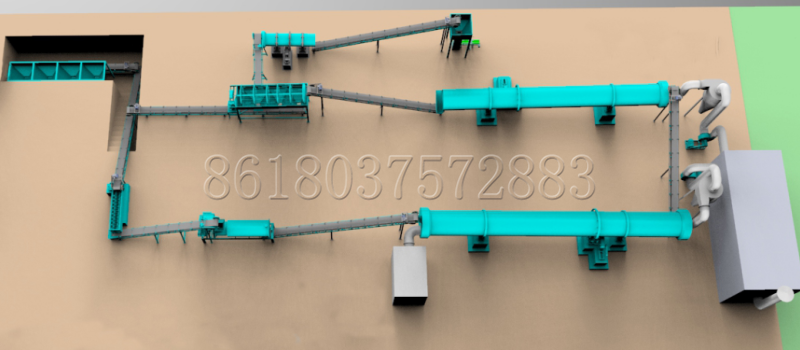
why do we produce bio organic fertilizer

Bio organic fertilizer production line is designed for the production of bio organic fertilizer. In the fertilizer manufacturing process of bio compost, different types and series of fertilizer equipment should be equipped to complete the production process. But why do we produce bio organic fertilizer?

Introduce biological fertilizer production line. In the production process of bio organic fertilizer, it will be equipped with chain crusher, horizontal mixer, flat mold granulator, drum screen machine and a series of fertilizer equipment.

Function of biological fertilizer:

1. Improve soil fertility. This is the main function of biological fertilizer. For example, all kinds of self generated, combined or symbiotic nitrogen fixation biological fertilizers can fix nitrogen in the air and increase the nitrogen content in the soil; A variety of microorganisms can decompose minerals such as phosphorus and potassium.

For example, silicate bacteria can decompose feldspar, potassium, mica and phosphate rock in soil, thus making insoluble phosphorus and potassium effective.

Assembly line, will be equipped with different types of machines to complete the production process.

2. Make and assist crops to absorb nutrients. Some bacterial fertilizers can not only increase the effective nutrients of soil, but also produce a variety of hormones and vitamins, thus promoting the growth of crops.

3. Enhance plant resistance. After inoculated with some biological fertilizers, they become the main bacteria in the rhizosphere of crops because of their massive reproduction in the roots. They can secrete antibiotics against fungi and bacteria, such as inhibiting the growth of hyperactive bacteria.

Bio fertilizer production

The use of fertilization equipment not only improves the work efficiency, but also saves more labor costs. In addition to the design of bio organic fertilizer production line, we also need to design organic fertilizer production line to produce organic fertilizer. More others design and use a series of fertilizer production process types to complete the production process.

Go to https://compostturnermachine.com/bio-composter-machine/ 

Complete sets of machines for bio fertilizer production line

Bio organic compost production line is a kind of compost which has the function of both microbial compost and organic compost. It is composed of specific functional microorganisms and organic matter, mainly used to remove plant residues (such as livestock manure, crop straw, etc.) After harmless treatment and decomposition.

The production method and operation process of bio organic compost are as follows:

  1. The first step in the production process of bio organic compost: the total dosage of selected strains is 0.2% – 0.5%.
  2. Production process of bio organic compost: preparation and requirements of raw and auxiliary materials:
  3. Main ingredients: fruit residue, dry bagasse, edible fungus residue, distiller’s grains, sugar residue, vinegar residue, starch residue, cassava residue, citric acid residue, soy sauce residue, monosodium glutamate residue, powder residue, bean curd residue, drug residue, oil residue, oil cake, bran, cottonseed meal, moldy feed, sludge, brewery’s residue, slaughterhouse residue, Ho water (s water), Leftover food, human and animal manure and other materials.

How to turn theses machines into bio composts, go to https://compostturnermachine.com/bio-composter-machine/

  1. Auxiliary materials: all kinds of crop straws, leaves and weeds, melons and vines, straw, pine hull, peanut hull, sawdust, rice husk powder, rice bran, etc. can be dried, crushed and made into high carbon.
  2. The proportion of main materials and auxiliary materials is 5:1-3:1.
  3. The production process of bio organic compost production line is divided into three steps: the water content should be controlled at 60-65%, and the water can only come out by hand holding materials in groups. Bacteria, main materials and auxiliary materials should be mixed evenly. The ambient temperature should be higher than 15 ℃. The stacking area of materials shall not be less than 4 square meters, the width shall be 1.5-2 meters, the height shall be 0.6 meters, and the length shall not be limited.
  4. The production process of bio organic compost is divided into four steps: composting should be turned at 50 ℃ once a day. If the chimney temperature exceeds 65 ℃, it will be overturned again. The temperature will be controlled below 70 ℃. The temperature of composting will be lower, the material will be loose, the material will not have the original smell, and there will be a little ammonia smell. White hyphae are produced in the pile and decompose.