My Blog

My WordPress Blog

Category Archive : organic manure processing

What Should You Know About Aerobic Composting in The Process Of Making Organic Fertilizer?

First, the classification of compost


Plant material such as crop stalks, green manure, weeds, etc., mixed with soil, human excrement, garbage, etc., and is decomposed by aerobic microorganisms. It is mostly used as base fertilizer, and the application amount is large, which can provide nutrients and improve soil properties, especially for improving sandy soil, clay soil and saline soil.


The method of making compost manure are divided into high-temperature composting and ordinary composting according to different raw materials. Aerobic method of composting uses plant matter with high fiber content as the main raw material. It is composted and fermented under aeration conditions, producing a lot of heat, and the temperature inside the compost is high (60-70 ° C), so it is fast decomposed, composted quickly, and has high nutrient content.


The high temperature fermentation process can kill the germs, insect eggs and weed seeds. Ordinary compost is generally mixed with more soil, the fermentation temperature is low, the composting process is slow, and the composting time is long. During compost fertilizer from cow dung, the chemical composition of nutrients is changed, the ratio of carbon to nitrogen is reduced, the mineral nutrients that can be directly absorbed by plants increase, and humus is formed.
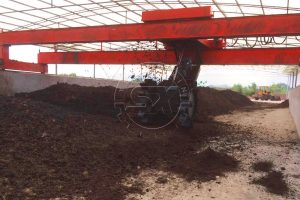
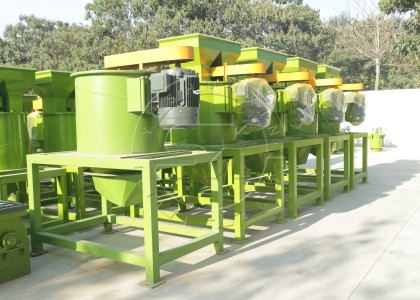
Wheel type composting machine in fertilizer plant

Commercial compost turner for sale


1. High-temperature composting method, in the leeward and sunny place near the water source, according to the proportion of straw, manure, animal and plant residues, sludge, etc., add some manure containing pyrolytic bacteria (such as mule manure or its extract) or fermented manure Stacked compost. The temperature in the compost is controlled at about 60°C for about half a month, which can fully kill the pathogenic bacteria, parasite eggs and weed seeds in the compost. Live maggots, pupae, or newly emerged adults.


2. Common composting method, composting is carried out under anaerobic conditions. Generally, semi-pit composting is used, that is, a rectangular pit is dug, and organic fertilizers such as straw, manure, animal and plant nitrogen sources and soil are piled up layer by layer. Shape it into a steamed bun, press it tightly, and turn it over after 1 month. Put the poorly decomposed one at the bottom and seal it with soil. 1-2 months in summer and autumn, and 3-4 months in winter. This composting method is convenient to make fertilizer, but it takes a long time and the degree of decomposing is uneven.


2. Good conditions for compost to decompose


1. Moisture. Maintaining proper water content is the primary condition for promoting microbial activity and compost fermentation. Generally, 60%-75% of the maximum water holding capacity of the compost material is appropriate. You can use a de-watering machine to adjust water in your raw materials.


2, ventilation. Maintaining proper air in the heap is conducive to the reproduction and activity of aerobic microorganisms and promotes the decomposition of organic matter. When composting at high temperature, more attention should be paid to the tightness of the stack to facilitate ventilation. Therefore, you need a manure compost machine.


3. Maintain a neutral or slightly alkaline environment. An appropriate amount of lime or calcareous soil can be added to neutralize and adjust the acidity and promote the reproduction and activity of microorganisms.


4. Carbon to nitrogen ratio. The carbon-nitrogen ratio for the normal decomposition of organic matter by microorganisms is 25:1. The carbon-nitrogen ratio of legume green manure is 15-25:1, the weed is 25-45:1, and the grass stem is 60-100:1. Therefore, according to the type of compost material, an appropriate amount of high nitrogen-containing substances should be added to reduce the carbon-nitrogen ratio and promote microbial activity. Some bases make their own organic fertilizers by purchasing chicken manure, pig manure, etc., while livestock and poultry manure cannot be used directly, and must be fermented and decomposed before they can be safely used. The immature organic fertilizer contains certain pathogenic bacteria, viruses, nematodes, root mites, weed seeds, etc., which lead to frequent plant diseases and overgrown weeds in the field; at the same time, the immature organic fertilizer produces harmful gases during the process of composting chicken manure for fertilizer, which is easy to cause burning. Root, soil water shortage and other hazards.

The process od composting cattle manure

Cattle manure compost turning machine for sale

3. Stacked materials


It is mainly composed of main material, auxiliary material, leavening agent or quicklime. The main material is cow, sheep, pig, and rabbit feces, accounting for about 80%; the auxiliary materials are various crop straws, fungus residues, litter, sawdust, etc., accounting for about 20%; other: starter (if conditions can be purchased, no need)


Fourth, the composting period


During spring, summer and autumn, the outdoor temperature is kept above 20℃ for composting.


5. Venue selection


Choose open land with sunny, slightly higher terrain, favorable drainage and convenient transportation.


6. Stacking method


The preparation of organic fertilizer is to mix the main materials and auxiliary materials, adjust the moisture (the moisture is controlled at about 60%), build the pile (2 meters wide, 1 meter high, and the length is not limited), and seal the pile (each 1-2 meters in the pile is inserted into the pile). Ventilation holes or small handfuls of corn stalks, provide oxygen channels for microorganisms, cover with plastic sheets), turn the heap (when the temperature in the heap reaches 60 ℃, turn the heap with a compost turner machine).


7. Decomposition check


The organic fertilizer must be fully decomposed. Criteria for decomposing completion:

1. The heap temperature drops below 40°C and remains unchanged.

2. The humidity of the compost is below 35%, there is no odor of raw materials, and there is a slight smell of ammonia.

3. The decomposed compost is dark brown, and the juice is light brown or colorless.

4. White hyphae are produced in the heap.
 

Why Should You Buy An Industrial Composting Machine For Your Cow Farm?

Why should farm manure compost use organic fertilizer toss machine? This is the first time to see a lot of fermentation tossing machine friends will have questions. Will have such doubt, because we use traditional manure composting fermentation method for many years, see mostly put a heap of dung find a do not matter, or dig a pit to put the pit is no matter, but don’t know this is difficult to achieve waste fermentation thoroughly, and was not completely waste fermentation was applied will bring significant damage to crops.

how to make cow dung fertilizer? In the process of composting manure, the farms use tilting machines for the following reasons:

1. Help oxygen enter

It is often said that ventilation, composting fermentation method belongs to aerobic fermentation, the process of composting with cow manure needs a lot of oxygen, and after a period of natural fermentation, the oxygen in the pile will gradually reduce, so that the fermentation speed is slow. The oxygen in the compost can be fully ventilated in the process of flipping by using an industrial composting facilities.

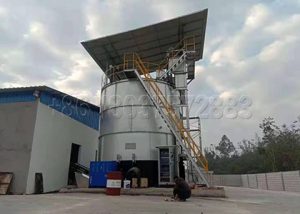
In-vessel composting system for sale

In vessel composting machine for organic fertilizer

2. Lower the temperature

In the traditional fertilizer, once in a while, you will find white smoke coming out of the pile with a shovel. The white smoke is steam, and the water will take the heat away in the evaporation process, so as to achieve the purpose of cooling. In the process of converting cow dung to compost manure, reasonable control of temperature is an important technical index, too high temperature will kill the nutrients in organic raw materials. The overstock compost can be evenly stirred inside and outside by using the toss machine, so that the moisture in the compost can evaporate greatly, so as to effectively control the temperature in the compost.

3, promote the fermentation process

Make the beneficial fermentation bacteria evenly and fully contact the fermentation material, promote the cow dung decomposting process.

The process od composting cattle manure

Cattle manure compost turning machine for sale

4, greatly improve work efficiency

The normal manual stacking speed of 2 days, using trough flipping machine can be completed in more than two hours, the uniformity is much better than manual operation.

After a series of treatment of the manure after the cow dung compost making machine, not only can be completely fermented, but also can make the feces from the traditional composting fermentation time of 2-3 months, reduce to only 15 days, greatly improve the efficiency of feces fermentation and processing capacity, so you can make compost and organic fertilizers.

The Project for Commercial Organic Fertilizer Plant

How much does small organic fertilizer production equipment cost? Many customers ask how much it costs to invest 10,000 tons of small organic fertilizer production line equipment? What about the cost?

1. The equipment of organic fertilizer production line makes the goat manure as organic fertilizer, which effectively realizes the recycling and utilization of waste, reduces environmental pollution and greatly saves resources. Small organic fertilizer production equipment is designed for users just starting. In our opinion, due to the lack of economic capital of the user who just started to build a factory, the price of organic fertilizer equipment is expensive, but the manure on the farm has not been treated locally, which pollutes the environment.

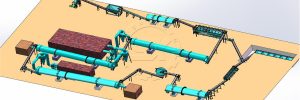
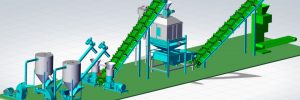
The design of fertilizer production line

The fertilizer making plant for sale

2 small organic fertilizer production line is characterized by low overall investment price, low cost, low technical requirements, suitable for large-scale cultivation and breeding enterprises and small fertilizer factory investment. Small machinary of organic fertilizers refers to the annual output of 5,000 tons – 20,000 tons between the organic fertilizer process equipment.

Annual output of 10000 tons of organic fertilizer equipment is a representative small organic fertilizer production line, its investment cost, equipment configuration, profit analysis is as follows.

3. Annual production capacity of factory of organic fertilizer :5000 tons — 20000 tons; Total investment in organic fertilizer production line equipment: 8,000  to 10,000 dollars; Organic fertilizer to meet the standards: organic fertilizer small production line processing technology requirements: production technology 1 person, 1 laboratory technician, 8 workers.

4. The following is a detailed analysis of the production line equipment with an annual output of 10,000 tons of organic fertilizer

 The production enterprise with an annual output of 10,000 tons of bio-organic fertilizer can deal with 22,000 tons to 25,000 tons of livestock and poultry waste annually. The following investment and construction and supporting facilities are required:

Fermentation workshop: Fermentation workshop – room: the area is not less than 60m×6= 360N

Plant requirements: the fermentation workshop should be sheltered from wind and rain, not other conditions, height of 2.5m can be; Raw material site: depending on the situation, generally in 80m-120m can;

Processing workshop: manufacturing organic fertilizer, the construction area of about 200m processing workshop;

Warehouse: depending on the actual situation, the warehouse above 300m should be built in general. According to the above requirements and the requirements of laboratory, logistics, office, dormitory and other conditions, the annual output of 10,000 tons of bio-organic fertilizer production plant, covering an area of 5-8 acres is more reasonable.

Personnel allocation: On the premise that the output of 10,000 tons is completed, about 8 production workers shall be allocated, including 1 production technician and 1 laboratory analyst. Management and marketing shall be determined according to the actual situation.

Commercial organic fertilizer production line for sale

Organic fertilizer production line design

5. Cost profit analysis of small organic fertilizer production line:

What is the cost of setting up a organic fertilizer plant? At present, the average price of granular organic fertilizer in the market is 850 dollar/ton, and the annual output value of 10,000 tons is 8.5 million dollars; All kinds of costs cost about 420 dollars per ton, 10,000 tons of annual cost 4.2 million dollar. Compared with the above cost and output value, it is obvious that as long as the sales strategy is appropriate, the cost can be recovered in that year. There are also handsome returns.

6. Invest in the configuration and raw materials of small organic fertilizer production line

Small organic fertilizer production line is divided into three configurations:

High configuration: dehydrator, fermentation and stacking machine, semi-wet material crusher, horizontal mixer, granulator, dryer, cooling machine, roller screen extension, coating machine, packaging equipment, belt conveyor, etc.

Medium configuration: semi-wet material grinder, horizontal mixer, granulator, dryer, cooler, roller screen extension, packaging equipment, belt conveyor, etc.

Low configuration: semi-wet material grinder, horizontal mixer, organic granule machine/roller screen machine, packaging equipment

7. Original material of organic fertilizer small production line:

Raw and auxiliary materials of small organic fertilizer production line:

1, organic main raw materials: livestock and poultry excrement, domestic sludge, domestic waste and other solid wastes account for about 50-80% of the formula; 2, no machine main raw materials: urea, ammonium phosphate, calcium, calcium, potassium sulfate, etc. account for about 10-30% of the formula;

3. Medium and trace element additives account for about 10% of the formula;

4, biological organic compound fertilizer also need to add biological bacteria powder :5% O – 10%;

5, according to the need may also use raw materials: peat, oil feet, fly ash, etc.; 6, auxiliary energy: water, electricity, coal.


Locating the Ideal Design for Your Organic Fertilizer Production Line

The requirement for organic fertilizer continues to be steadily increasing. If you’re in a position to build an efficient production line, it’s likely that you’ll have the capacity to attract substantial profits. With that said, make sure that you use the right approach. Center on locating the ideal design for your organic fertilizer plant.

Take a look at Other Successful Plants

Naturally, you want your plant to thrive. If you need good results, why not look into other plants which may have reached high levels of success? If you examine these plants and check out the machine they’re using, you’ll use a clearer picture of what your very own plant needs.

In the event you don’t have the choice of touring a plant directly, you may want to take a look at video footage of plants. This will help you to start to see the equipment these plants are utilizing, and it will also provde the opportunity to consider the design from the plant.

Consider the Space That You’ll Be Operating In

While other plants can be quite a source of inspiration, the best design for the production line for organic fertilizer will be different in line with the space you’ll work in. You’ll want to make sure that you employ your layout as efficiently as possible.

The volume of space you possess will limit the device you’re able to purchase. Measure your space carefully and strive to utilize the space you might have as efficiently as you can. Make sure that you will have ample space for employees just to walk around and examine the gear as needed.

2 t/h organic fertilizer production line

Organic fertilizer production line for sale

Find a Vendor That Will Answer The Questions You Have

The proper vendor provides a lot of guidance as you hunt for your ideal plant. Look for a vendor which has strong communication skills and is also greater than prepared to answer inquiries which you may have.

Your vendor might be able to offer you recommendations and assist you towards equipment for organic fertilizer making which is in accordance with what you’re trying to find. Make certain you possess a way to learn more regarding the machinery you’re checking out prior to your purchase.

Decide If Getting a Full Production Lines Are the proper Selection for You

If you wish to be sure that you select equipment that works well well together, you could find that investing in a full production line is your greatest choice. Buying bundled equipment is an easy strategy to acquire equipment which will interact seamlessly, also it can also assist you to find high-quality equipment in a better price.

Commercial organic fertilizer production line for sale

Organic fertilizer production line design

Check out the bundles available from vendors that you simply trust. If you feel that you can make a production line having a better design, you ought to go ahead and do this. However, investing in a complete production line could be a way to save both time and cash.

Make sure that you keep all this advice in mind while you strive to find the ideal design for your organic fertilizer production line. Choose your equipment properly and work to build a fertilizer plant that may exceed your production goals.

Exactly What Can a Fermentation Tank Do In Your Organic Fertilizer Plant?

To be able to build an organic fertilizer plant by using a high production rate, you must make sure that you have all the necessary equipment within your production line. The method should begin by composting the organic materials that you’ll be employing to help make your fertilizer. That’s something you could do with a fermentation tank.

Tanks Permit you to Prepare Materials for the following Stage of Production

As a way to produce fertilizer which can be used and sold, you’ll must prepare the type of material you’ll be working with for the upcoming stage from the production process. A fermentation tank is an excellent way of getting these materials ready for the following step from the process.

While composting can take too much time, utilizing a fermentation tank will help to streamline the composting process. Together with the right equipment, you’ll have the ability to accomplish more and employ some time you do have as efficiently as possible.

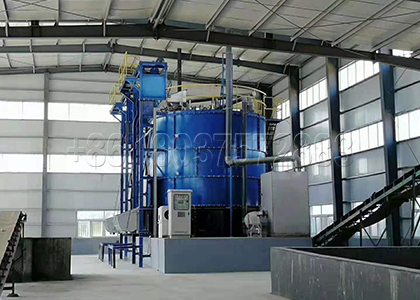
In-vessel composting system for sale

In vessel composting machine for organic fertilizer

It Is Possible To Improve Your Fertilizer

An additional benefit of using a fermentation tank is that it provides you with the opportunity to add materials which will ultimately improve your fertilizer and improve its overall effectiveness. As one example, you can include helpful fungi and bacteria to the mixture.

When you deal with a tank, you’ll be in the position to create a better and fast compost. Bacteria are capable of doing a great deal to enhance the overall quality of your fertilizer. You’ll have the ability to try to manufacture organic fertilizer that fits extremely high standards of quality.

The Fertilizer Is Going To Be Maintained

A tank will use shifts in temperature to quickly decompose the type of material being utilized in the creation of fertilizer. After the in vessel composting process is complete, the temperature will shift again so that you can maintain the fertilizer. This can be sure that the product still meets high standards of quality when it is ready for release.

Composting can be an efficient way to produce fertilizer on the small-scale, but because it’s this sort of time-consuming process, it isn’t a good option for big scale operations. A fertilizer tank will help to streamline this important step along the way while ensuring the upkeep in the fertilizer which is produced.

the manufacturing of a vertical fermentation tank

The production of in-vessel composting machine

The Tank Prevents Caking

Caking fertilizer is yet another issue that one could encounter in these sorts of production lines. If you’re looking for a way of preventing these sorts of problems, working with a tank is a solid option. Caking can prevent proper fermentation, but thankfully, with a tank, you can keep caking from happening to begin with.

Should your goal is to produce top quality organic fertilizer inside your plant, having the right devices are crucial. By using a tank, you’ll be capable of speed up the production process while avoiding many common problems.

With a fermentation tank as part of your organic fertilizer production line, you’ll see better results overall. When you’re purchasing essential equipment for fast composting to your plant, you’ll want to make certain that you invest in the correct type of fertilizer tank. Look for a tank that provides you with excellent results.

Comparing the Latest Varieties of Fertilizer Blenders available for sale

Some of the latest types of fertilizer blenders on the market offer features that you just won’t get in older products. Investing in a newer model will help you to produce high-quality fertilizer while meeting your production goals. Keep these matters in your mind when you compare several of the newer models available on the market.


Consider Which Features You’ll Utilize


You’ll learn that lots of the best models out there offer a number of appealing features. Although these traits will help products to stand out, not all of these characteristics will probably be helpful to you. Don’t pay more for any feature unless it has real value to you.


When you’re comparing various modelsof fertilizer blending machines, you shouldn’t just check out the quantity of features these designs have. You should also think of how you’ll have the capacity to utilize these features. If features aren’t useful to you at all, you may go ahead and ignore them.


Focus On Options That Fall Affordable


It’s likely which you have a specific cost range in your mind for this particular purchase. There’s no reason to hang around looking at models that you just won’t have the ability to afford. Instead, you should spend your time evaluating models that happen to be affordable for you personally.


Decide what you’re willing to spend on buying a fertilizer blender. Once you have a value reason for mind, you can take advantage of resources like price filters to enable you to limit your choices. You’ll have the capacity to closely evaluate models that you can comfortably afford.


Look at the Value Different Types Provide


Price is likely to be a major consideration in almost any purchase, but it should not be your only consideration. Consider just how much value various models are able to provide you. From there, you will discover the blender that might be the most effective use of your financial allowance.


One of many questions you’ll want to ask yourself while evaluating these blenders is when well the various models fit your needs. Which blenders meet your production goals? Do most of these models meet your quality standards? Look closely at what you’ll be getting for your money prior to making one last purchasing decision.

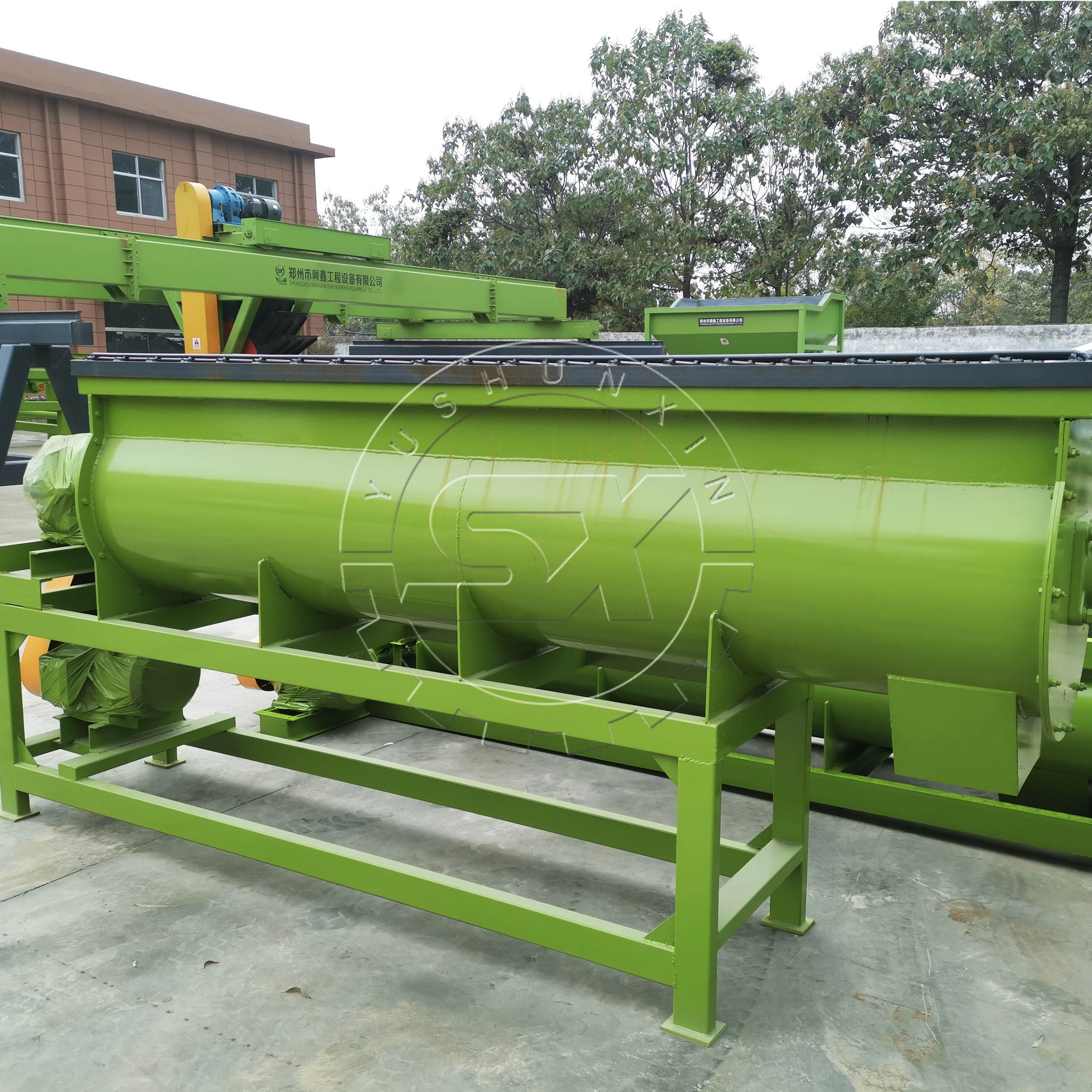
New single shaft blending machine for fertilizer production

single shaft mixer for sale


Contrast Your Top Choices


If you’re taking a look at a wide selection of fertilizer blenders, you should work to slowly define your set of choices. After that, you need to contrast the models on top of your list against the other person. Give attention to the pros and cons of specific models.


When you’re considering numerous blenders, the comparison process can feel overwhelming. If you’re capable of simplify your choices and take more time considering options that get noticed for you, you’ll have an easier time finding some of the best new models out there.


Take a close look with the 5 latest forms of fertilizer blenders on the market. Once you’ve found 5 newer models which could meet your needs, follow this advice and compare your options. With these suggestions, you have to have no issues finding the right model for you to buy.

What Are the Steps Required to Make Pig Manure Organic Fertilizer?

Pig manure organic fertilizer is an organic fertilizer made from pig manure after a series of processing. The fermented pig manure is an ideal fertilizer, which can make the soil loose and fertile and provide sufficient nutrients for the growth of crops. So what steps are required for the production of pig manure organic fertilizer? The following FPC pig manure organic fertilizer equipment manufacturers will take you to find out.

Granular and powder organic fertilizer production line

First, the raw materials such as pig manure should be fermented and decomposed. The whole fermentation process can kill the harmful bacteria in it. The fermentation process is a more important step in the production process of organic fertilizer.

Second, the next step is material crushing, using organic fertilizer semi-wet material crusher to preliminarily decompose the raw materials.

self propelled compost turner

Third, ingredients are a key step in fertilizer production. It is mainly to add appropriate ingredients in proportion to enrich the organic matter content of organic fertilizers and improve the quality of fertilizers.

Fourth, after the material is evenly stirred, it is the granulation step. The mixed material is made into the required granules, which is especially suitable for materials with relatively high viscosity. The effect of granulation will be directly related to the quality of the finished organic fertilizer, so this is also the whole process. Important steps in the production process.

Fifth, the temperature of the material will become very high after the drying process, and then the temperature needs to be lowered, and cooling equipment is required here.

Cow Manure Granulation Machine

Sixth, screening is to screen out unqualified material particles, and unqualified materials will be returned to the production line for reprocessing. The use of organic fertilizer screening equipment here can save labor and has the advantage of high efficiency and easy operation.

Seven, the container used for stirring must meet the requirements of the production process, such as pressure resistance, high temperature resistance, medium corrosion resistance, and ensure the cleanliness of the product. Because the materials are different, the manufacturing process and structure of the mixing container will also be very different.

Eighth, the transportation is to transport the finished organic fertilizer to the place where the terrain is relatively high, and prepare for convenient storage.

Vertical Fertilizer Material Crushing Machines

Vertical Fertilizer Material Crushing Machines

Nine, packaging is the last link in the production of pig manure organic fertilizer, in order to protect the finished product during the circulation process, and at the same time to facilitate sales.

Fermentation turners, pulverizers, mixers, granulators, dryers, screening machines, packaging machines, etc. are needed in the process of producing pig manure organic fertilizer. The above are all the steps for producing pig manure organic fertilizer. You can refer to it and hope to bring some help to your work. If you still have questions or needs about organic fertilizer production, please feel free to visit FPC organic fertilizer equipment factory.

Why Is the Market Demand for Organic Fertilizer Equipment so High?

As a new type of mechanical equipment, organic manure fertilizer processing machinery equipment is a very popular mechanical equipment. The development in recent years has been recognized and favored by everyone. The future development of organic fertilizer equipment is still relatively optimistic.

Organic fertilizer equipment has a high position in the proportion of fertilizer production. Therefore, organic fertilizer is indispensable. Many savvy businessmen regard the investment in organic fertilizer production line as a very promising commercial project. This has greatly stimulated the rapid rise of organic fertilizer equipment manufacturers and can also bring us a lot of High economic benefits! So what are the characteristics of organic fertilizer equipment that can make the market demand so much? FPC will answer you one by one.

Granular and powder organic fertilizer production line

  1. Organic fertilizer equipment is a kind of chicken and pig manure as the main raw material, adding a certain amount of nitrogen fertilizer, phosphate fertilizer, potash fertilizer, magnesium sulfate, ferrous sulfate and other substances, and fermenting rice bran, yeast, soybean meal and sugar for a certain period of time as biological organisms Grain, under the action of sulfuric acid, mixed fermentation equipment to make biological fertilizer.
  2. FPC organic fertilizer production equipment has compact structure and advanced technology. It uses some beneficial microorganisms to promote the rapid decomposing of organic wastes such as livestock and poultry manure. It adopts a unique pool-type continuous aerobic fermentation technology to quickly decompose and remove water from organic wastes. , Sterilization and deodorization, to achieve the purpose of harmlessness, reduction and resource treatment, short fermentation period (7-8 days), low energy consumption, and stable product quality.
  3. Intelligent and automatic control of the turning process of fermented materials. Under the action of the vertical and horizontal traveling mechanism, the high-speed rotating rake will continuously toss and scatter the fermented materials and produce a certain displacement, so that the materials in the tank are regular, The gradual backward movement is equidistant, thus forming a continuous aerobic fermentation process.

5,000 Tons of Organic Fertilizer Pellet Production Line Configuration

The organic fertilizer production line with an annual output of 5,000 tons is a small organic fertilizer production line, and its configuration includes: fermentation turning machine, grinder, granulator, dryer, and screening machine. If necessary, automatic packaging machines, etc. must be prepared. These equipments are generally indispensable. In fact, these equipments have different preparation parameters and different specifications, such as pelletizers, disc type pelletizers, and new types of pelletizers. The same is true for other equipment, of course, there are differences in prices, so everything depends on your specific situation. What you need, we can customize different equipment according to your needs. A small organic fertilizer production line has low investment cost and is easy to use. It can not only meet the needs of local fertilizers, but also meet the needs of surrounding markets.

Detailed description of the configuration of the production line with an annual output of 5,000 tons of organic fertilizer pellets:

  1. Fermentation composting turner machines: directly put the materials into strips, and use a wheeled compostturning machine to ride on the pile for fermentation. Using tank fermentation, you need to build 1-5 fermentation tanks with a width of 3 meters and a length of 40-60 meters according to your production scale. The fermented product is continuously put into the fermentation tank, and the groove turning compost machine is used for fermentation, which can achieve the purpose of water regulation, uniform stirring, deodorization and dehumidification. In this way, a lot of labor can be saved, and the purpose of being fully decomposed can be achieved.
  2. Crusher: The large debris and stones in the sieved organic fertilizer are separated and crushed, so that it is beautiful and can ensure the quality of the product.
  3. Granulator: After crushing and mixing the material, it is granulated.
  4. Drying machine: drying and cooling the manufactured particles.
  5. Screening machine: sieving the fermented organic fertilizer to separate the bulk and debris fibers inside, which is convenient for the next step of crushing, granulating and packaging of semi-wet materials.
  6. Packing machine: granulate organic fertilizer particles for direct packaging and sales.

How to Deal with Duck Manure in Duck Farms? It’s Enough to Do This!

According to the test, a duck can excrete about 100 grams of feces per day, and 10,000 ducks can excrete about 1 ton of feces per day. According to the breeding cycle, if it is calculated for 40 days, about 40 tons of manure will be excreted. A duck farm that sells 1 million ducks a year will excrete about 4,000 tons of manure every year. Due to the continuous discharge of manure, it is a problem that duck farms must solve. For example, traditional methods of manure treatment have many similar problems:

  1. The place where duck feces accumulate should be large.
  2. The demand for straw bedding is also great.
  3. The environment and sanitation of the duck house are too poor, which has a greater impact on the disease prevention and control of the duck house.
  4. The feces of ducks are washed by rain or flow by themselves, causing serious pollution in the surrounding areas.
  5. Freight increases and economic benefits decrease.

Duck manure is a high-quality fertilizer with rich N, P, and K content and quick effect. It can improve the soil, increase organic matter, and improve soil fertility when used in farmland. In order to improve the economic benefits of farmers

The processing of duck manure into organic fertilizer has become an ideal choice. Then the duck manure is processed into organic fertilizer? The following FPC company analyzes the methods and techniques of duck manure into organic fertilizer particles:

organic fertilizer granulation line

The organic fertilizer production process is closely related to the equipment configuration of the organic fertilizer production line. General organic fertilizer production line complete equipment is mainly composed of fermentation system, drying system, deodorization and dust removal system, crushing system, batching system, mixing system, granulation system, screening system and finished product packaging system.

The construction scale of the equipment configuration of the granular duck manure organic fertilizer production line is generally 5,000 tons-100,000 tons per year. It is necessary to comprehensively consider local resources, market capacity, and market coverage.

The investment scale and product plan design of the granular duck manure organic fertilizer production line need to be formulated according to the following conditions: raw material resource characteristics, local soil conditions, local planting structure and main crop varieties, and comprehensive consideration of local resources, market capacity, and market coverage radius.

The investment scale and product plan design of the granular duck manure organic fertilizer production line need to be formulated according to the characteristics of raw material resources, local soil conditions, local planting structure and main crop varieties, factory site conditions, and the degree of automation of production. FPC has a full set of granular duck manure organic fertilizer production line configuration, professional engineers design a variety of configuration schemes for you.